120th Congress
Risks to Peaceful Transfer of Power

Democrats won control of both chambers on Nov. 3, and the 120th Congress convenes Jan. 3, 2027. This tracker follows the steps between now and then (state certification, contested races, the House roll call) and any attempt to keep lawful winners from taking their seats. So far the handover looks orderly: President Trump says he is “absolutely willing” to accept the results (New York Times, via the Seattle Times), Speaker Mike Johnson says “we’ll administer the oath to everybody” (Fox News), and we have found no county refusing to certify. The one live federal effort, a Justice Department suit to block Alaska’s Senate certification, was dismissed Nov. 1; the department is appealing (CBS News).
The national, nonpartisan Election Protection coalition works year-round to help voters make sure their vote is counted, staffed by trained volunteers (866ourvote.org). Before sharing a claim about the results, check it against a credible source; our claims list below covers what is circulating now.
Democrats have won at least 240 House seats and 54 Senate seats in AP race calls, so no single disputed race can decide control of either chamber. We have found no county refusing to certify, and AP and Votebeat report no post-election wave of court challenges. The Alaska suit targets one seat and was dismissed for lack of standing. Watch: Alaska’s ranked-choice tabulation Nov. 18 and the appeal; Mississippi’s Senate count (counties certify by Nov. 13; state law has no recount process); certification deadlines through mid-December; then the Jan. 3 roll call and swearing-in.
What would change this rating ↓
congress120.america2.newsThe new Congress, by the numbers
We don’t call races. Counts change as races are called; the AP’s calls are the record.
| Source | House (218 for a majority) | Senate (51) |
|---|---|---|
| AP race calls | 240 D · 147 R, 48 uncalled (no new calls since Nov. 4, 9:29 p.m. ET) | 54 D · 44 R; Alaska and Mississippi uncalled |
| NBC News projection | 242 D · 151 R projected so far; estimate 259 D · 176 R (Nov. 5, 9:01 a.m. ET) | 54 D · 44 R; Alaska and Mississippi uncalled |
| CBS News estimate | 251 to 268 D (Nov. 4) | — |
Why it matters for Jan. 3. Democrats have already won more than the 218 seats needed for a House majority. Even if disputed seats were left off the roll, control of the House wouldn’t change. In the Senate, Alaska’s and Mississippi’s uncalled races won’t decide control either.
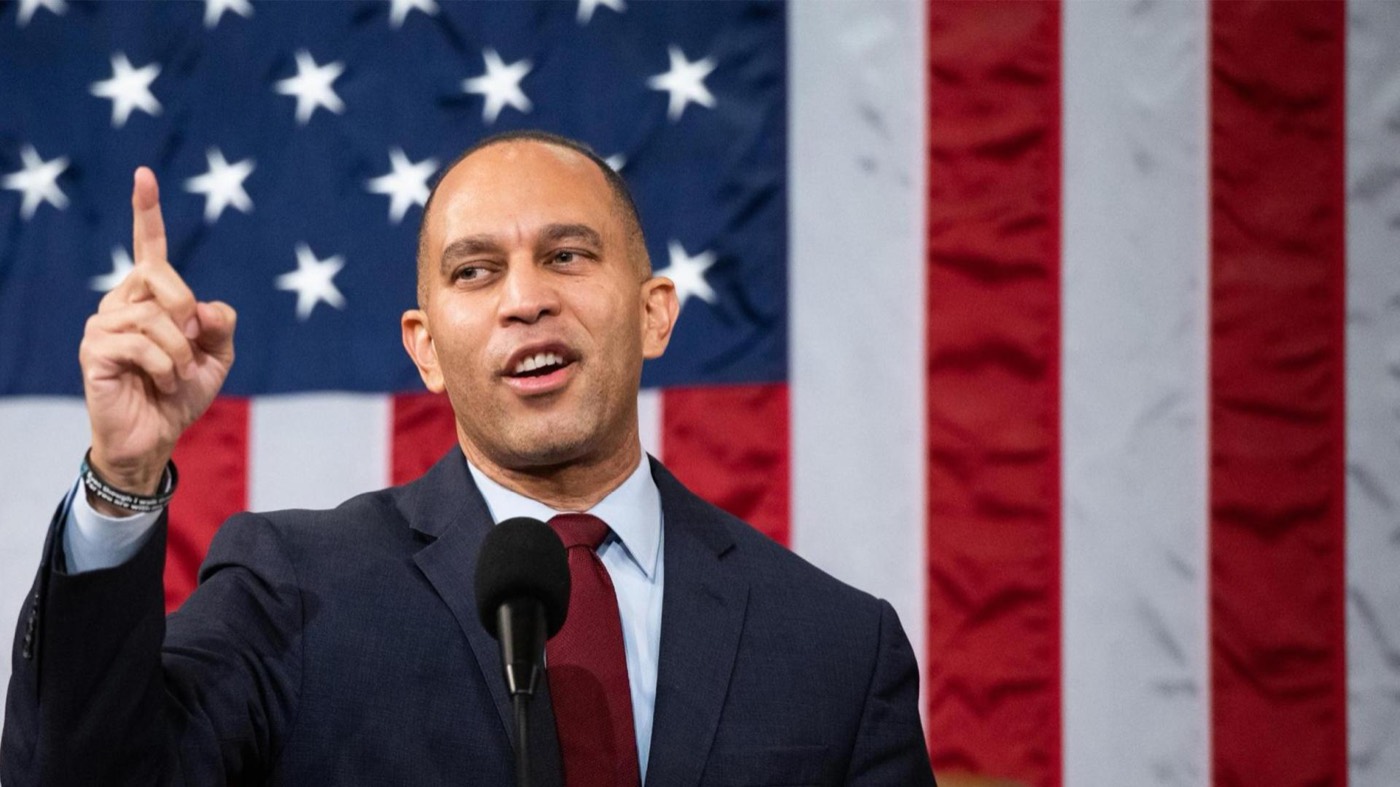
Who is expected to lead. House Democratic Leader Hakeem Jeffries is all but certain to become Speaker; the House elects its Speaker by floor vote when the new Congress convenes Jan. 3 (NPR). In the Senate, Chuck Schumer says, “I’ll be reelected as majority leader.” Senate Democrats will likely hold their secret-ballot leadership vote, including senators-elect, in early December. Several incoming senators say they will back someone else, but no challenger has emerged (Roll Call).
Get America 2.0 in your inbox
Analysis of Russian influence, information warfare and the networks behind them. Free; unsubscribe anytime.
Latest reports
New reporting from major outlets and official sources, listed as it appears. Our monitoring adds headlines from major outlets automatically. "Checked" means our software fetched the full report and confirmed it supports its headline. "Reviewed" means an editor checked it against its source. "Auto" items have not been checked yet. Tap a label for our note. None of this is an endorsement. Our assessment is the rating above.
- Trump ally leading Justice Department civil rights unit to resign, sources say (Reuters)
reviewed ▾
An editor checked this report against its source. (2026-11-05) - How Colom Changed a Long Shot in Mississippi Into a Race Too Close to Call (The New York Times)
reviewed ▾
An editor checked this report against its source. (2026-11-05) - Mississippi Senate race heads to an extended vote count and possible ballot battle (NBC News)
reviewed ▾
Our note: NBC reports Democrat Scott Colom led Sen. Cindy Hyde-Smith by 65 votes with thousands of ballots outstanding; Mississippi law has no recount mechanism, and counties must send results to the secretary of state by Nov. 13.An editor checked this report against its source. (2026-11-05) - Northern California counties hit with subpoenas over alleged noncitizen voting ahead of midterm elections (CBS News)
reviewed ▾
An editor checked this report against its source. (2026-11-05) - Trump’s Election Fraud Reward Raises Fears of Vigilantism, Local Officials Say (The New York Times)
reviewed ▾
Our note: The Times reports local officials fear President Trump’s $1 million reward for information leading to an election-fraud conviction could foster unrest or vigilantism.An editor checked this report against its source. (2026-11-05)
What would change this assessment
We move the rating only on credible, named sourcing, and only after editorial review. Fights over a single race are tracked below; a broader effort is what moves the meter.
- not seenTo Rhetoric: President Trump or a senior official retracts his acceptance of the results, calls called results fraudulent, or says winners shouldn’t be seated.
- not seenTo Rhetoric: A member of Congress or House leader announces a challenge to a member-elect’s right to take the oath.
- not seenTo Concrete action: A federal warrant or seizure of ballots, tabulators or records at an election office before certification.
- not seenTo Concrete action: A county board votes not to certify, or misses its deadline, and no court acts within days.
- not seenTo Concrete action: A governor or secretary of state withholds or delays a winner’s certificate of election.
- not seenTo Concrete action: House leadership replaces or sidelines the House Clerk before Jan. 3, or charges are brought against election officials or winners over the vote.
- not seenTo Impaired: An order or official action in effect pushes a certification past its legal deadline.
- not seenTo Blocked: A certified winner is left off the Clerk’s roll or is not sworn in on Jan. 3.
Single-race watch. Alaska: the Justice Department’s Ninth Circuit appeal, the Nov. 18 ranked-choice tabulation and the Nov. 25 certification target. Mississippi: counties certify by Nov. 13, and state law has no recount process.
What is actually known
- No wave of challenges. “There was no day-after wave of court actions challenging the outcome,” the AP reports (AP Fact Focus, via the Houston Chronicle). Votebeat found no major Republican figure disputing results by the end of election night (Votebeat).
- Alaska suit dismissed. On Nov. 1, Judge Sharon Gleason threw out the Justice Department’s suit to block certification of Alaska’s Senate race, finding the department lacked standing; it appealed the same day (CBS News).
- Alaska count (as of Nov. 4). Democrat Mary Peltola led Sen. Dan S. Sullivan by 637 votes Wednesday night with many ballots still uncounted (Al Jazeera, citing AP). Ranked-choice tabulation is Nov. 18, and results are set to be certified Nov. 25 (Anchorage Daily News).
- Mississippi count (as of Nov. 5). Democrat Scott Colom led Sen. Cindy Hyde-Smith by more than 1,700 votes with more than 95% counted; the race has not been called (New York Times). State law has no recount or contest process for a Senate race (NBC News), and counties certify by Nov. 13 (WLBT).
- The roll call. On Jan. 3 the House Clerk, Kevin McCumber, calls the roll of members-elect with regular credentials; the Speaker can replace the Clerk (Lawfare).
- The Speaker’s word. “We’ll administer the oath to everybody,” Speaker Mike Johnson said on Oct. 29 (Fox News).
Claims in circulation
The most-shared claims about the Jan. 3 transfer, and what public sources can confirm.
Watching“Federal agents will seize ballots nationwide for a hand count.”
Described by Peter Ticktin, attorney for Tina Peters, on a Sept. 30 podcast: take control of ballots after machines count them and hand-count them before certification. Peters reportedly met Trump in the Oval Office on Oct. 5; the White House would not discuss it (Colorado Newsline). No order exists. On Oct. 16 Ticktin told Axios that authorities would probably need to commandeer ballots and election equipment to investigate; asked about calls for martial law, the White House did not answer directly, saying Trump “has done more than any other President to ensure we have free and fair elections” (Newsweek). The one federal ballot seizure on record was under a court warrant, for 2020 records in Fulton County (ABC News). We have found no seizure of ballots or equipment since the vote.
Risk scenario“There’s a plan in Congress to replace the House Clerk and block Democrats from being seated.”
A risk scenario, not a reported plan. Former judge J. Michael Luttig lays it out in The New Republic; an advocacy group’s video presents it as a plan (Facebook). No member of Congress or document describes one. The scenario is still useful for monitoring and prevention: watch for any change of House Clerk before Jan. 3, and who presides that day and whether certified winners are left off the roll. With Democrats past 218 seats in AP race calls, leaving disputed seats off the roll would not change control (see the numbers).
Speculative“The House won't seat the winners on Jan. 3.”
No plan to refuse seats wholesale has been reported, and Speaker Mike Johnson calls the idea “a nonsense narrative”: “We’ll administer the oath to everybody” (Fox News, Oct. 29). Two Republicans have floated a narrower move: challenging individual Democratic Socialists’ right to take the oath. Rep. Tim Burchett says he will try it against Darializa Avila Chevalier, and Rep. Keith Self says he is considering it. The Supreme Court ruled in Powell v. McCormack (1969) that the House cannot exclude a member-elect who meets the Constitution’s age, citizenship and residency requirements (Fox News).
No evidenceNearly every county moving toward Democrats is what a wave looks like, not fraud.
When almost every county moves the same way, that is a broad change in how people voted. Fraud would show up as a few places breaking sharply from the pattern, and these posts point to no such outlier. NBC News found House and Senate Democrats outperformed “in nearly every county and jurisdiction” (NBC News). In Texas, all 171 rural counties moved toward Democrats in the governor and Senate races; the gains were largest along the border, where turnout in the 16 border counties rose more than 8 points (Daily Yonder). Virginia’s 2025 governor’s race looked the same: every county and city moved at least 4.7 points toward Democrats compared with 2021 (VPM). The first table behind this claim cites no source and lists 39 Rhode Island “counties”; Rhode Island has five, and 39 is its number of cities and towns (ri.gov).
Where it came from: an unsourced table, “States That Shifted Blue,” posted Nov. 5 by an account with about 120,000 followers (about 290,000 views); a post claiming 2,848 of 3,109 counties “drifted left” (about 167,000 views); a Houston-area account’s post on Texas (about 540,000 views); and commentator Kyle Becker’s newsletter post on Texas data, which itself calls the turnout-report discrepancies it cites “not established findings” that ballots disappeared.
MisleadingKansas’s post-election audit is a routine check run after every election.
Kansas law requires counties to hand-count a sample of ballots after every election and match it to the machine count before the canvass. The secretary of state starts the process the morning after a November election (Kansas Secretary of State FAQ). Every county completed the same audit after the August primary (Kansas Secretary of State). Races within 1% get a larger audit.
Where it came from: an X post (about 10,000 views) from an account with about 106,000 followers sharing the secretary of state’s Nov. 2 notice of the audit as “BOOM” and “eyes on.”
MisleadingA 2018 executive order lets Trump undo the midterm results.
Executive Order 13848 is real and in force. Trump signed it in 2018 and renewed its national emergency on Aug. 31 (Federal Register). After any federal election it gives the Director of National Intelligence 45 days to assess foreign interference (for this election, by Dec. 18). The attorney general and DHS then have another 45 days to report any effect on election infrastructure (Executive Order 13848). That second report would be due around Feb. 1, 2027, a month after the new Congress is sworn in. The order’s only remedy is sanctions on foreign persons: blocking their property and barring dealings with them. It says nothing about certification, recounts or who takes office. Each chamber judges its own members’ elections (Constitution, Art. I, Sec. 5), and the new Congress convenes Jan. 3 (20th Amendment).
Where it came from: “EO 13848 is active. The foreign interference assessment clock is running. The 45-day window is open,” from an X post (about 283,000 views) calling the midterms a “trap” that will let Trump undo Democratic wins. It quotes an account with about 12,000 followers whose post drew about 2.1 million views and that has since added: “Nothing has been certified yet.” A second post (about 120,000 views and 7,600 likes), from an account with about 5,800 followers, pushes the same “trap” story with an image of Trump captioned “You honestly didn’t think we were unprepared for election rigging and voter fraud, did you?” The quote carries no source, and the image appears to be recycled from Facebook.
No evidence“Former officials are plotting a violent coup to seize power after the midterms.”
Viral posts since Oct. 20. What is documented: a small group of US national-security officials has been quietly advising states and lawmakers on how to prepare if the administration interferes in the election (Washington Post), and outside groups are preparing responses to scenarios ranging from ballot seizures to the Insurrection Act (The Hill). Planning to resist interference through courts, statements and protest is legal. No public evidence shows plans for violence, for harming the president, or for seizing power.
Key dates
- Nov. 10, 5 p.m.Mississippi: last day for mail ballots postmarked by Election Day to arrive (NBC News).
- Nov. 13Mississippi counties certify their results to the secretary of state (WLBT).
- Nov. 18Alaska’s ranked-choice tabulation (Anchorage Daily News).
- Nov. 25Alaska’s results are set to be certified (Anchorage Daily News).
- Late Nov.–Dec.Most state certification deadlines fall in late November and December (NCSL).
- ~Dec. 18A Director of National Intelligence assessment of foreign interference is due under Executive Order 13848, 45 days after the election. It has no role in certification, but watch whether it is cited against results.
- Jan. 3, 2027The 120th Congress convenes at noon. The Clerk calls the roll of members-elect, the House elects a speaker, and members are sworn in (Lawfare).
- Around Feb. 1, 2027Under Executive Order 13848, the attorney general and DHS report on any effect of foreign interference on election infrastructure, 45 days after the intelligence assessment (Federal Register).